- Home
- Page
Bone Meal
Bone meal is an organic fertilizer made from steamed and finely ground animal bones. It is widely used in organic farming as a natural source of phosphorus and calcium. The main raw materials include cattle or poultry bones collected from slaughterhouses. These bones are cleaned, pressure-steamed to remove fats and pathogens, dried, and then crushed into a fine powder. The final product is sieved and packed for agricultural use.
Bone meal typically contains around 12–15% phosphorus and 20–25% calcium. It is especially beneficial for root development, flowering, fruit formation, and overall plant strength. It improves soil fertility gradually because it releases nutrients slowly, making it suitable for long-term crops like fruit trees, vegetables, and flowering plants.
Advantages include improved root growth, enhanced bloom production, and better soil microbial activity. It is eco-friendly and safe when properly processed. However, disadvantages include slow nutrient release, limited nitrogen content, and possible attraction of animals if not properly mixed into soil. Overuse may cause phosphorus buildup, affecting nutrient balance.
Bone meal is best applied during soil preparation or at planting time. When used correctly, it supports sustainable farming and promotes healthy, nutrient-rich crops in organic agricultural systems.
Bone Meal Preparation in Organic Farming, there are mainly three standard methods
- Raw (Natural Dried) Bone Meal Method
- Steamed Bone Meal Method (Most Recommended)
- Burned Bone Meal (Bone Ash) Method

Raw (Natural Dried) Bone Meal
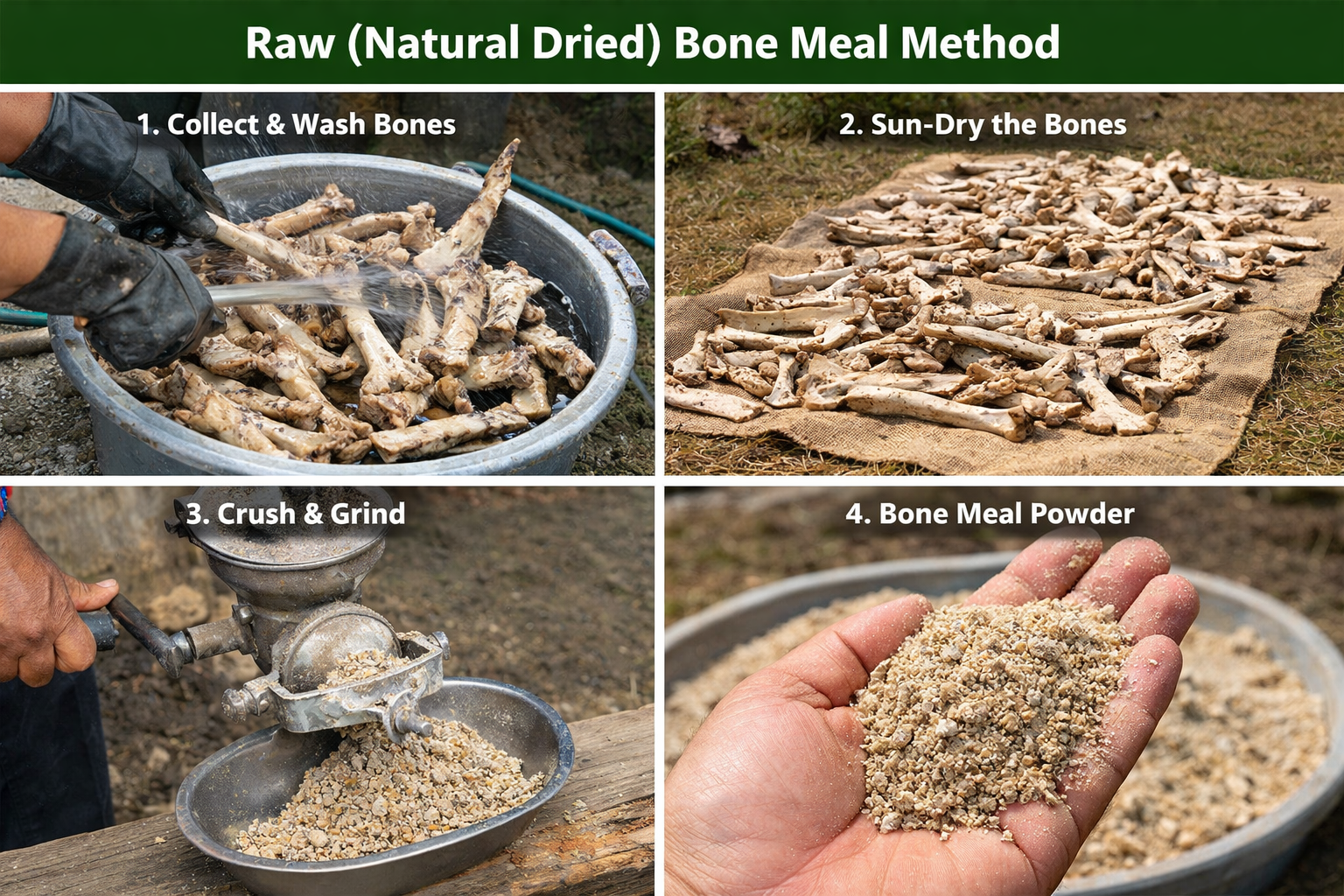
Raw (Natural Dried) Bone Meal means a simple traditional method of making bone fertilizer without steaming or burning. Raw → Bones are used in their natural form, only cleaned and dried. Natural Dried → Bones are sun-dried instead of being processed with machines or high heat. In this method, bones are washed, dried in sunlight for several days, and then crushed into powder. It is a low-cost and simple preparation method mainly used by small farmers.
Steamed Bone Meal
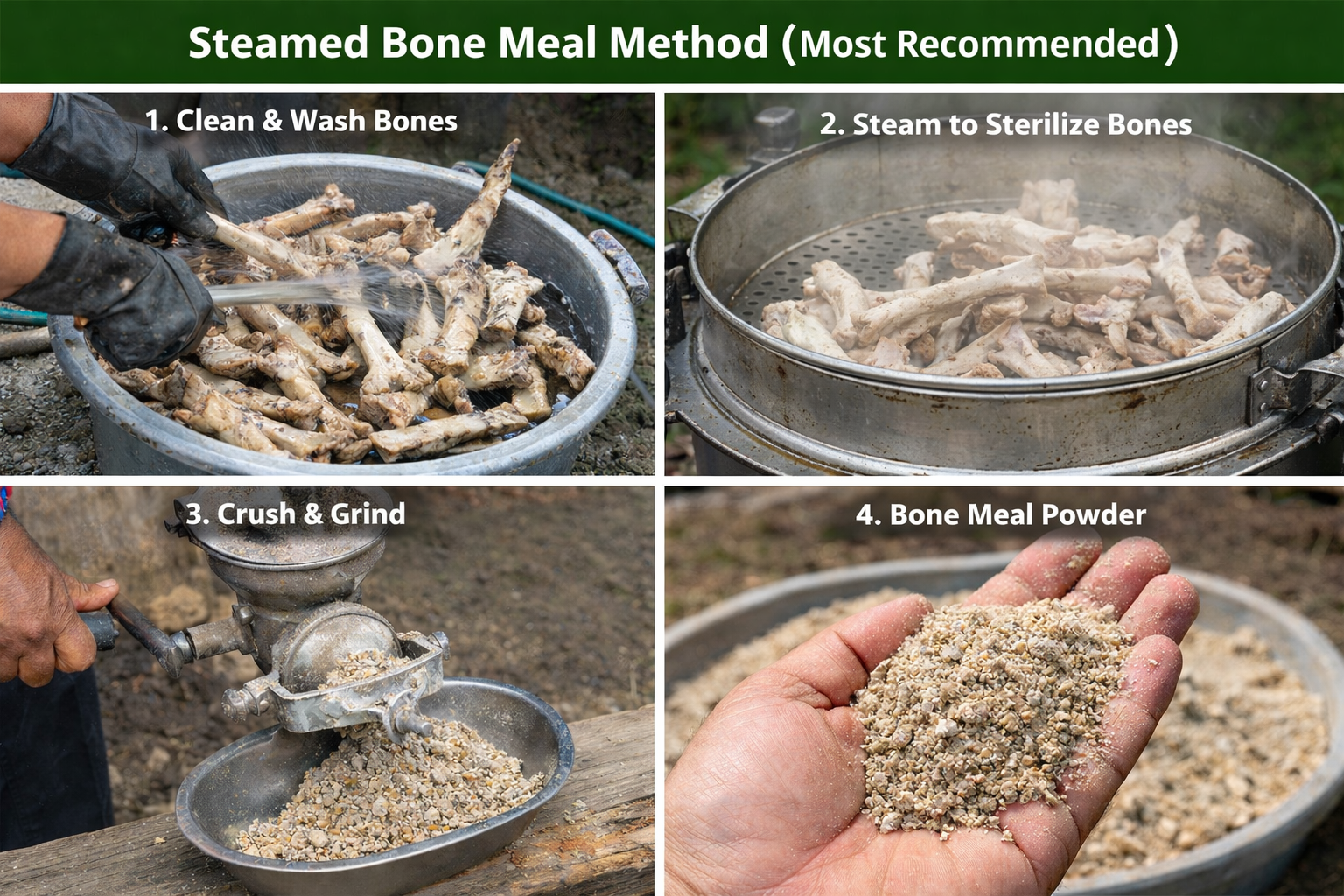
Steamed Bone Meal means bones are processed using high-temperature steam before grinding. Steamed → Bones are pressure-heated with steam to kill bacteria, remove fats, and sterilize them. Bone Meal → The sterilized bones are dried and ground into fine powder fertilizer. This method is the most recommended because it is safe, hygienic, and provides better nutrient availability for organic farming.
Burned Bone Meal (Bone Ash)
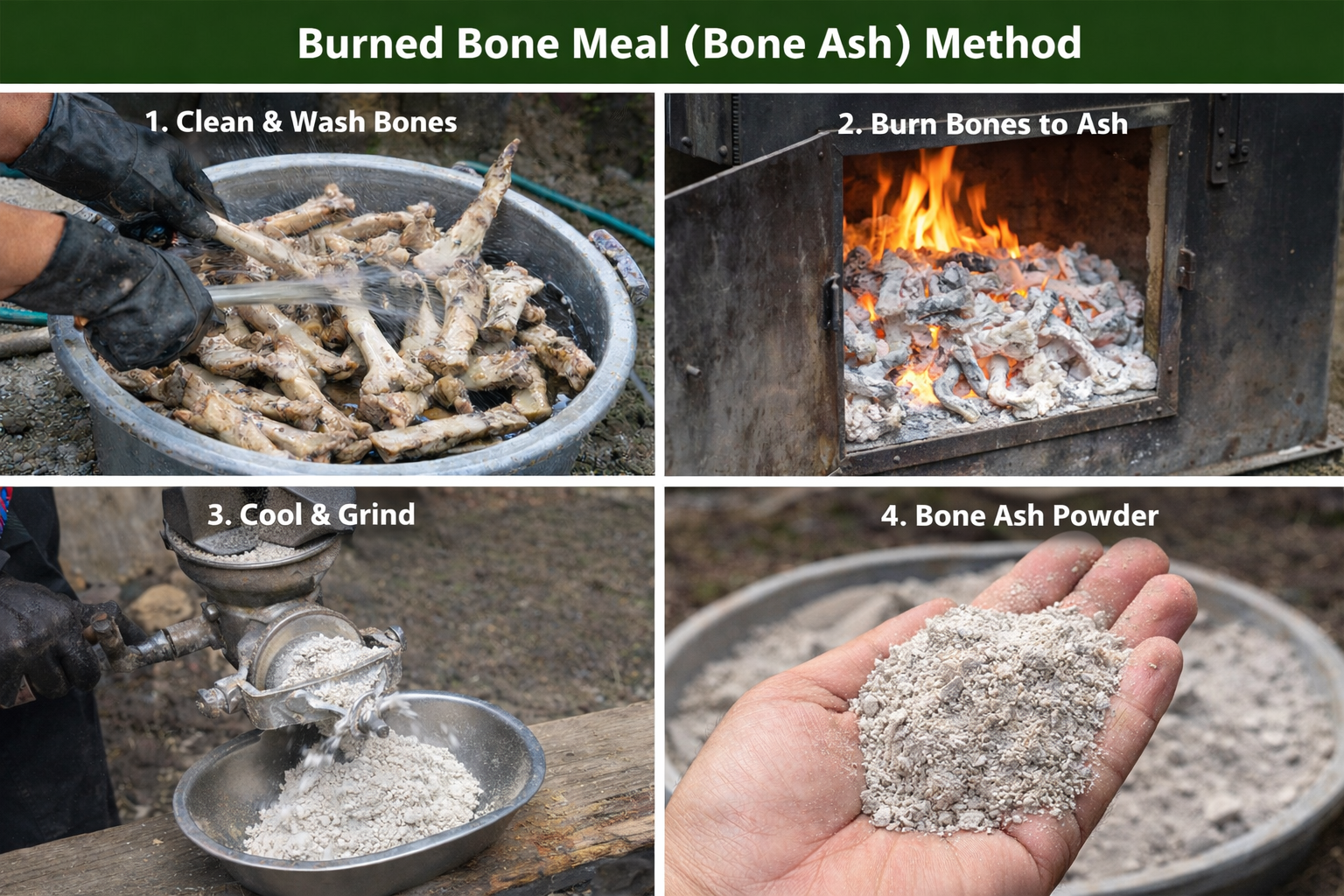
Burned Bone Meal (Bone Ash) means bones are heated at very high temperature until they turn into ash, then ground into powder. Burned → Bones are completely burned in a kiln or furnace to remove organic matter. Bone Ash → The remaining white ash is rich in concentrated phosphorus and calcium. This method produces a faster-acting phosphorus fertilizer, but it is more alkaline and should be used carefully to avoid soil pH imbalance.
Bone Meal Preparation in Organic Farming
Bone meal is a natural organic fertilizer made from animal bones. It is widely used in organic farming as a rich source of phosphorus (P) and calcium (Ca), which are essential for plant growth, root development, and flowering.
1. Raw Materials
Cattle, sheep, goat, or poultry bones
Clean water
Heat/steam source
Grinding machinery
Bones are usually collected from slaughterhouses and meat processing units.
2. Processing Procedure
Collection & Cleaning – Bones are washed to remove blood and impurities.
Boiling/Steaming – Bones are pressure-steamed at high temperature to kill pathogens and remove fats.
Drying – Steamed bones are sun-dried or mechanically dried.
Crushing & Grinding – Dried bones are crushed into a fine powder.
Sieving & Packing – Powder is sieved for uniform size and packed.
The final product generally contains 12–15% phosphorus and 20–25% calcium.
Uses
Root crop development (carrot, potato, beetroot)
Flowering plants and fruit trees
Soil preparation before planting
Organic vegetable farming
Benefits
Promotes strong root growth
Enhances flowering and fruiting
Improves soil fertility gradually
Long-lasting nutrient release
Eco-friendly and sustainable
Advantages
Slow-release fertilizer
Improves soil microbial activity
Adds essential calcium
Safe for organic farming certification
Disadvantages
Slow nutrient availability
Low nitrogen content
Ineffective in highly alkaline soils
Can attract animals if not mixed properly
Harmful Effects (If Misused)
Over-application may cause phosphorus buildup
Nutrient imbalance in soil
Poor-quality bone meal may contain contaminants
Additional Information
Bone meal works best in slightly acidic soils (pH below 7). It should be mixed well into the soil rather than applied on the surface. It is commonly applied during land preparation or at planting time. Properly processed bone meal is safe, sustainable, and valuable for organic farming systems.
1️⃣ Raw (Natural Dried) Bone Meal Method
This is the simplest traditional method.
Process:
Collect animal bones
Wash thoroughly
Sun-dry for several days
Crush and grind into powder
Use: Small-scale farmers, local preparation
Limitation: May not fully remove pathogens or fats
2️⃣ Steamed Bone Meal Method (Most Recommended)
This is the most common and safest organic farming method.
Process:
Clean bones
Pressure steam at high temperature
Remove fats and pathogens
Dry and grind into fine powder
Advantage:
Sterilized and safe
Better nutrient availability
Accepted in certified organic systems
3️⃣ Burned Bone Meal (Bone Ash) Method
Bones are burned at high temperature before grinding.
Process:
Clean bones
Burn in kiln/furnace
Cool and grind into powder
Feature:
Higher phosphorus concentration
Faster nutrient release
More alkaline in nature
Summary
👉 Total common preparation methods: 3
Raw dried method
Steamed method (best for organic farming)
Burned/ash method
The steamed bone meal method is generally preferred for commercial and certified organic farming because it ensures safety and nutrient stability.